

Can Exercise Help Reduce the Appearance of Leg Veins?
July 27, 2026
How Can I Get Rid of Visible Leg Veins Without Surgery?
July 27, 2026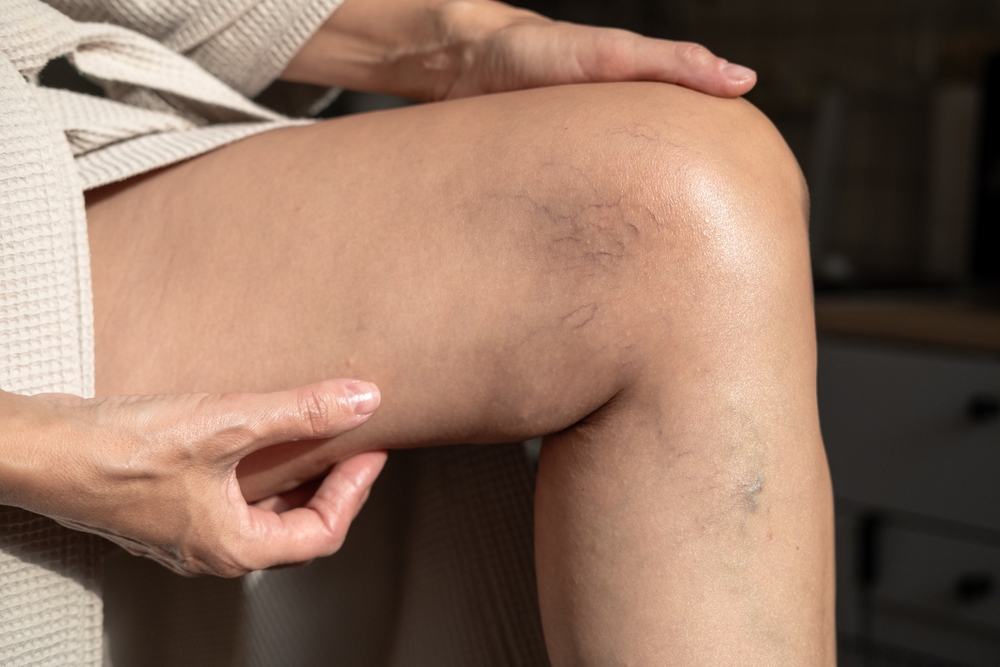
Spider veins and poor circulation are two terms that often get mentioned in the same breath. That connection is understandable but not always accurate.
Whether spider veins are a sign of poor circulation depends on what is driving them. They can indicate a localized venous issue without reflecting the health of your overall circulatory system.
This post clarifies the relationship between spider veins and circulation, which warning signs actually warrant concern, and when a professional evaluation makes sense.
What Spider Veins Actually Tell You
Spider veins are small, dilated surface vessels that have lost structural integrity in their walls. They are not a direct measure of how well the heart pumps blood or how efficiently arteries deliver oxygen to tissue.
They are a sign of localized venous pressure and vein wall weakness. That is a different category from systemic circulation problems.
Most spider veins develop because of genetics, hormonal changes, or sustained pressure on the venous system from prolonged sitting or standing. None of these indicate a whole-body circulation problem.
The Difference Between Venous and Arterial Circulation
The circulatory system has two main components that serve distinct functions. Arteries carry oxygenated blood away from the heart; veins return deoxygenated blood back toward it.
Spider veins involve the venous side exclusively. Arterial circulation, which is what most people mean when they say poor circulation, is an entirely separate system.
Poor arterial circulation causes symptoms like cold extremities, wound healing problems, and numbness. These are distinct from the aching, heaviness, and visible surface vessels associated with venous issues.
Are Spider Veins a Sign of Poor Circulation in the Veins Specifically?
Spider veins can indicate localized venous insufficiency, which is a meaningful distinction worth understanding. Venous insufficiency means vein valves are not closing properly and blood is pooling rather than moving efficiently toward the heart.
That is a form of circulatory dysfunction, but it is confined to the venous system in the affected area. It does not reflect arterial health, cardiac output, or overall cardiovascular function.
Patients who assume spider veins mean their heart or arteries are compromised may either panic unnecessarily or dismiss a real venous issue as minor. Neither response leads to the right outcome.
When Spider Veins Do Signal Something Worth Evaluating
Patients wondering are spider veins a sign of poor circulation should pay attention to symptoms that accompany the visible veins.
Spider veins accompanied by leg aching, heaviness, swelling, or skin discoloration suggest underlying venous reflux rather than a purely cosmetic concern.
These symptoms point to valve dysfunction that goes deeper than surface vessels.
Skin changes around the ankles, including darkening, thickening, or persistent itching, can indicate chronic venous insufficiency that warrants evaluation. Untreated reflux progresses over time and becomes harder to manage.
A diagnostic ultrasound maps the venous system and identifies where valve failure exists. This is the only reliable way to determine whether spider veins have an underlying circulatory cause.
Are Spider Veins a Sign of Poor Circulation That Will Worsen?
Spider veins driven by genetics or minor hormonal fluctuations often remain stable for years. Those driven by underlying venous reflux tend to multiply and spread as pressure on the system increases.
Compression stockings, regular movement, and leg elevation slow progression in both cases. They do not reverse visible veins or address valve dysfunction already present.
Early evaluation gives patients the clearest picture of what is driving their veins and whether treatment will be straightforward or requires addressing a deeper venous issue first.
Get a Clear Answer About Your Vein Health, Book Your Consultation With Our Vein Experts Today
Spider veins are not always a warning sign, but they are always worth understanding.
The Vein Center of Maryland offers free evaluations so patients can get a complete picture of what their veins are actually telling them.
Contact us online or call our office at 410-970-2314 to schedule your consultation for spider veins today.