

Why Do Some People Get Spider Veins and Others Do Not?
October 31, 2026
Can Compression Socks or a Standing Desk Prevent Varicose Veins at a Desk Job?
October 31, 2026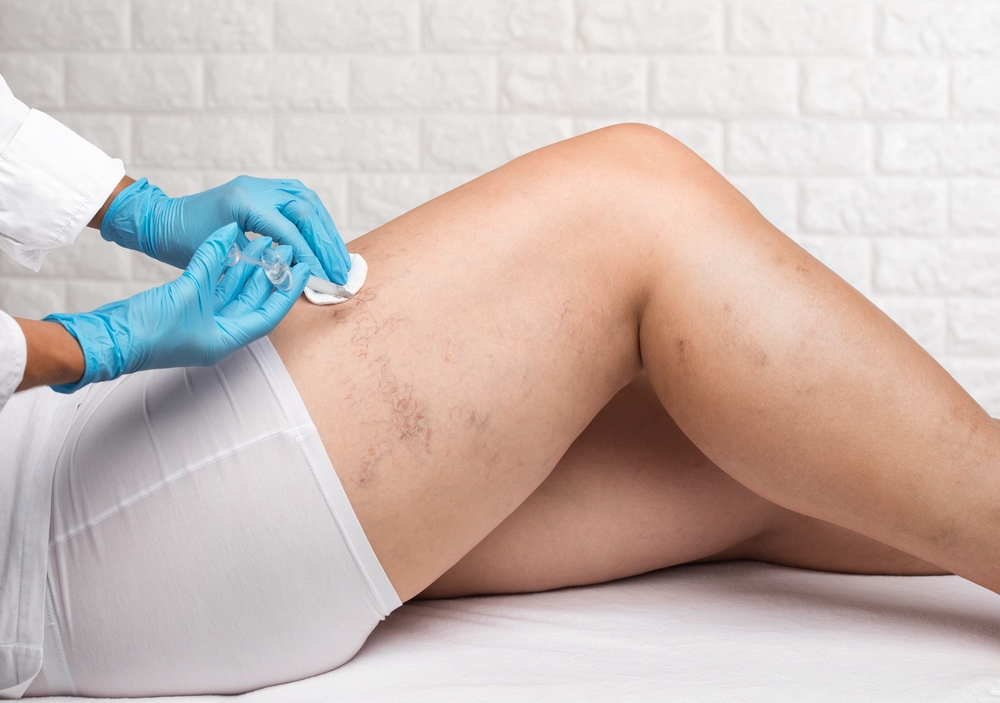
You have decided to explore treatment for visible leg veins. Now comes the practical question: how many appointments should you put on the calendar?
The number of sclerotherapy sessions depends on the veins being treated, the area involved, and how your body responds. One person’s treatment schedule is not a reliable forecast for someone else.
The Vein Center of Maryland offers sclerotherapy among its vein treatment options. A consultation helps establish whether injections suit your concerns and what a realistic plan might involve, including the possibility of several visits.
Why Sclerotherapy Sessions Vary From Person to Person
Sclerotherapy involves injecting a solution into selected veins. The solution irritates the vein lining, encouraging the vessel to close. Over time, the treated vein becomes less visible.
The number and distribution of veins influence how much treatment is needed. A small cluster near one knee presents a different task from widespread spider veins across both legs.
Vein size and type matter, too. Spider veins, small varicose veins, and larger veins with underlying reflux may require different approaches rather than simply more injections.
Your clinician also considers medical history, previous treatment, and suitability for the procedure. A useful estimate begins with examining your legs, not matching you to a standard package.
The Treatment Area Is Only Part of the Picture
A visible network can include veins of different sizes, and not every vessel necessarily needs the same treatment. Your provider may recommend treating selected areas first, then reassessing what remains.
The Vein Center of Maryland uses duplex ultrasound to evaluate venous disease and help guide treatment selection. Ask whether ultrasound is appropriate for your symptoms, especially if you also have swelling, heaviness, or larger bulging veins.
When an underlying circulation problem is identified, addressing that problem may be part of the plan. Additional surface injections alone may not be the right answer.
Your goals also influence the discussion. You may want improvement in one noticeable area or treatment across several regions. Be specific about your priorities so the proposed schedule reflects what matters to you.
Results Take Time Between Appointments
Treated veins do not necessarily disappear when you leave the office. Spider veins often fade over several weeks, while larger treated veins can take longer.
That delay does not automatically mean treatment failed. Healing and visible improvement take time, and reassessment helps distinguish remaining veins from areas still responding.
Some people need two or three treatments, while others require a different number. That general range is not a personal estimate or a guarantee of complete clearance.
Follow your clinician’s instructions about walking, compression, and activity after each visit. Discuss bruising, temporary discoloration, and other possible effects before treatment so you know what to expect.
Do not schedule closely spaced appointments simply to finish before an event. Your clinician should determine an appropriate interval based on the treatment and your response.
New veins can also develop later. Future maintenance or treatment of new vessels is different from the initial series, so clarify what your estimate includes.
Build a Schedule Around Your Veins and Goals
Before starting, ask how many sclerotherapy sessions are initially recommended, when progress will be reviewed, and what might change the plan. Discuss costs, aftercare, and whether other treatments could be appropriate.
The clinical team at The Vein Center of Maryland can explain your options and help you prepare questions about timing and expectations.
Contact us online or give our office a call at 410-970-2314 to schedule a vein evaluation.
Bring your treatment history, symptoms, and goals. A personalized assessment can help turn an uncertain appointment count into an informed plan for your next steps.
Meet Your Vein Specialists: The Vein Center of Maryland
At The Vein Center of Maryland, healthy, pain-free legs begin with dedicated expertise. Our clinical team combines decades of specialized surgical leadership with advanced vascular imaging to deliver comfortable, minimally invasive vein care:
-
Yash Kumar, M.D., F.A.C.S. (Director & Board-Certified Surgeon): Diplomate of the American Board of Surgery and Fellow of the American College of Surgeons (FACS) with over 25 years of specialized experience treating varicose veins and venous disease. Dr. Kumar trained at the All India Institute of Medical Sciences and completed surgical residency at Sinai Hospital in Baltimore. He specializes in state-of-the-art, minimally invasive outpatient procedures—including Laser Venous Ablation, Radiofrequency Closure, Sclerotherapy, and Ambulatory Phlebectomy.
-
Krystal “Kit” Alcott, PA-C, RVT, RPhS (Physician Assistant & Vascular Specialist): Board-certified Physician Assistant holding dual specialized credentials as a Registered Vascular Technologist (RVT) and Registered Phlebology Sonographer (RPhS). A graduate of Nova Southeastern University, Kit has performed thousands of vascular ultrasounds and minimally invasive vein treatments. Beyond clinical care, she actively trains healthcare providers and sonographers nationwide in advanced vascular diagnostics and ultrasound guidance.