
Considering Sclerotherapy in Harford County? What to Expect From First Injection to Final Results
October 31, 2026
EVLT Recovery Week by Week: What’s Normal and What’s a Red Flag
November 1, 2026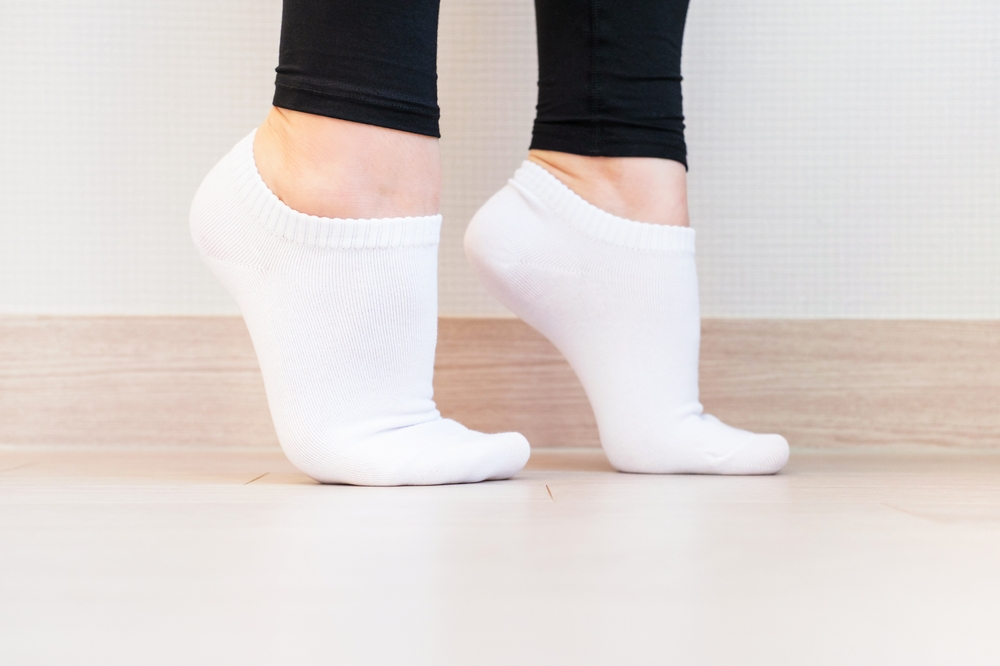
Nursing, teaching, retail, and hospitality can keep you on your feet for hours. Yet standing through a shift is different from moving your legs, and that distinction matters for circulation.
If you are researching exercises that help you avoid leg veins, focus on movements that activate your calf muscles. They support blood flow, although no routine guarantees prevention.
The Vein Center of Maryland offers vein treatment options for symptoms including aching, swelling, and heaviness. Adding movement to your day can support comfort, while persistent symptoms deserve an evaluation.
Why Standing Still Can Affect Your Veins
Leg veins return blood toward the heart against gravity. One-way valves help prevent backward flow, while contracting calf muscles help push blood upward.
When you stand still, those muscles provide less assistance than they do during walking. Pressure can build in the veins, particularly when valves are already weakened.
Varicose veins develop when problems with vein walls or valves allow blood to collect. Family history, age, pregnancy, and other factors also affect risk.
Exercise supports circulation but cannot repair damaged valves or erase existing varicose veins. Understanding that limit helps you set realistic expectations and recognize when movement alone is insufficient.
Exercises That Help You Avoid Leg Veins
Short walking breaks are a practical starting point. Whenever work allows, walk between tasks rather than remaining in one position. Even a trip down the hallway activates muscles that standing still does not.
Supported heel raises offer another option. Hold a stable counter or chair, slowly lift your heels so your weight shifts toward the balls of your feet, then lower with control. Begin with a few comfortable repetitions.
Seated ankle pumps can fit into breaks. With your legs supported, point your toes away, then draw them back toward your shins. Move gently through a comfortable range.
Ankle circles provide movement. While seated, rotate each ankle in both directions without forcing the joint.
Choose movements that match your balance, mobility, and workplace conditions. Stop if an exercise causes pain, and seek individualized guidance if you have an injury or medical restriction. These are circulation breaks, not a competition.
Build Movement Into the Whole Workday
Link brief movement opportunities to routines you already follow: changing tasks, taking a scheduled break, or stepping away for water. Consistency matters more than creating an elaborate workout during a busy shift.
When possible, alternate standing with seated rest. Elevating your legs during a suitable break may ease symptoms, although your work environment will determine what is practical.
Comfortable footwear that allows ankle movement can also help. Compression stockings may support symptom management for appropriate patients, but ask a clinician about suitability, fit, and pressure before choosing medical compression.
Outside work, regular walking, swimming, or cycling can complement these small breaks. Your routine should reflect your physical abilities and any existing health conditions.
Our clinical team at The Vein Center of Maryland can discuss symptoms that persist despite workplace adjustments. Evaluation may include ultrasound to assess blood flow and guide treatment recommendations.
Seek prompt medical attention for sudden unexplained swelling in one leg, especially with pain, warmth, or redness. Do not try to exercise through these symptoms.
Take the Next Step Toward More Comfortable Shifts
Exercises that help you avoid leg veins are best viewed as supportive habits, alongside attention to symptoms and personal risk factors. Your legs deserve care throughout the workday.
Contact us online or give our office a call at 410-970-2314 to schedule a vein evaluation.
Discuss your job demands, symptoms, and activity routine. An assessment can help you understand whether movement changes, compression, or treatment should be part of your plan.
Meet Your Vein Specialists: The Vein Center of Maryland
At The Vein Center of Maryland, healthy, pain-free legs begin with dedicated expertise. Our clinical team combines decades of specialized surgical leadership with advanced vascular imaging to deliver comfortable, minimally invasive vein care:
-
Yash Kumar, M.D., F.A.C.S. (Director & Board-Certified Surgeon): Diplomate of the American Board of Surgery and Fellow of the American College of Surgeons (FACS) with over 25 years of specialized experience treating varicose veins and venous disease. Dr. Kumar trained at the All India Institute of Medical Sciences and completed surgical residency at Sinai Hospital in Baltimore. He specializes in state-of-the-art, minimally invasive outpatient procedures—including Laser Venous Ablation, Radiofrequency Closure, Sclerotherapy, and Ambulatory Phlebectomy.
-
Krystal “Kit” Alcott, PA-C, RVT, RPhS (Physician Assistant & Vascular Specialist): Board-certified Physician Assistant holding dual specialized credentials as a Registered Vascular Technologist (RVT) and Registered Phlebology Sonographer (RPhS). A graduate of Nova Southeastern University, Kit has performed thousands of vascular ultrasounds and minimally invasive vein treatments. Beyond clinical care, she actively trains healthcare providers and sonographers nationwide in advanced vascular diagnostics and ultrasound guidance.