

Hormonal Changes and Leg Veins: Why Veins Get Worse During Pregnancy and Menopause
November 1, 2026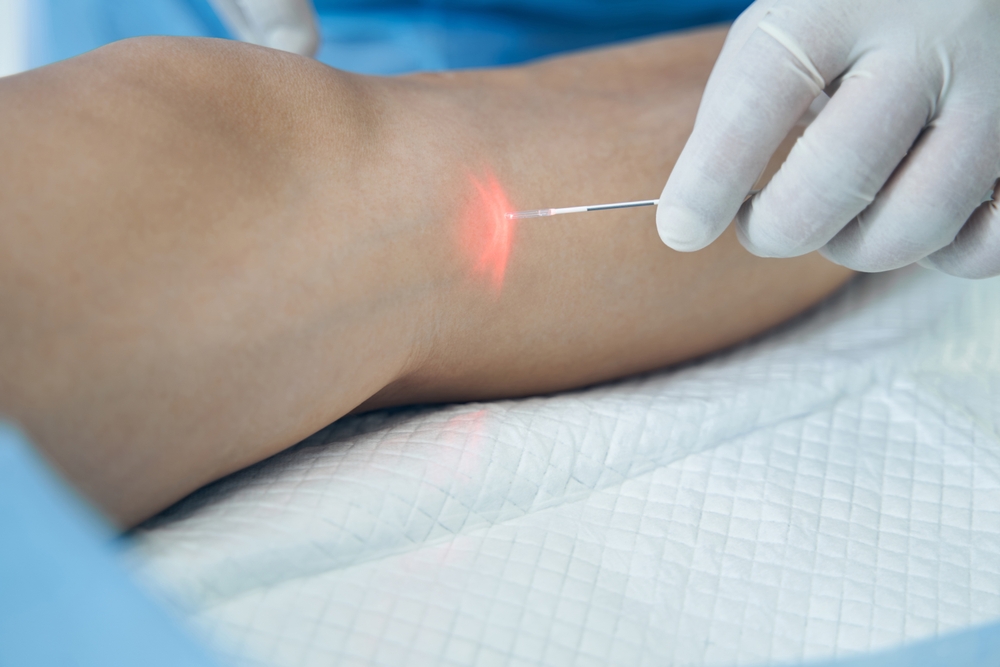
If a vein specialist recommends ablation, the next question is often: which kind? Radiofrequency ablation and endovenous laser treatment (EVLT) both address problematic veins, but they use different energy sources.
Comparing RFA vs EVLT in Maryland starts with understanding what the procedures share, where they differ, and why your ultrasound findings matter more than a treatment acronym.
The Vein Center of Maryland offers both techniques among its vein treatment options. Having access to more than one approach allows the conversation to focus on your veins, symptoms, and medical history.
How RFA vs EVLT in Maryland Works
Both procedures treat selected veins with faulty valves that allow blood to flow backward and collect. This backward flow, called reflux, can contribute to aching, swelling, heaviness, and varicose veins.
During RFA, a clinician places a thin catheter inside the affected vein and uses radiofrequency energy to generate heat. EVLT uses a laser fiber to deliver heat within the vein.
In either case, the goal is to close the treated vessel so blood travels through other veins. Ultrasound guides placement, and local anesthesia helps numb the treatment area.
These are treatments for an identified circulation problem, rather than interchangeable cosmetic appointments. Small surface spider veins may need a different approach, such as sclerotherapy.
A diagnosis comes before deciding which device belongs in your treatment plan.
Comparing Comfort, Recovery, and Everyday Activity
RFA and EVLT are generally performed as outpatient procedures. Patients usually go home the same day, and walking is encouraged afterward.
Both can cause bruising, tenderness, swelling, or a pulling sensation along the treated vein. Compression stockings may be recommended, with the wearing schedule determined by your clinician.
Some patients return to routine activities quickly, while demanding jobs or strenuous exercise may require additional restrictions. Ask specifically about lifting, driving, travel, and prolonged standing.
You may encounter claims that one technique is always more comfortable or offers a faster recovery. Individual experiences depend on the device, treatment settings, vein characteristics, and any additional procedures.
Rather than choosing from a blanket promise, ask what your provider expects for your treatment. A realistic recovery plan is more useful than assuming either procedure has no downtime.
Which Technique Is Better for Your Veins?
There is no universal winner for every patient. The location, size, and course of the affected vein, your symptoms, and your health history help guide the recommendation.
The Vein Center of Maryland uses duplex ultrasound to evaluate venous disease and determine which treatment may be appropriate. Our clinical team can explain why RFA, EVLT, or another option suits the findings.
Both thermal techniques carry risks, including infection, bleeding, nerve irritation or injury, skin burns, and blood clots. Discuss your individual risks and how the practice monitors recovery.
Follow-up may include ultrasound to assess the treated vein. Ask when that visit should occur and whom to contact if symptoms worsen.
Neither procedure guarantees that new varicose veins will never develop. Additional treatment may be needed for other affected veins or persistent symptoms.
Cost and insurance coverage also deserve discussion. Coverage depends on your plan and medical necessity; ask the practice what documentation or authorization is required before scheduling.
RFA vs EVLT in Maryland: Choose a Plan Based on Your Evaluation
When considering RFA vs EVLT in Maryland, focus on the diagnosis, the reason for the recommended technique, and the follow-up plan. You should leave the consultation understanding what treatment can reasonably accomplish.
Contact us online or give our office a call at 410-970-2314 to schedule a vein evaluation.
Discuss your symptoms, ultrasound findings, recovery needs, and insurance questions. The best next step is a recommendation built around your health and daily responsibilities.
Meet Your Vein Specialists: The Vein Center of Maryland
At The Vein Center of Maryland, healthy, pain-free legs begin with dedicated expertise. Our clinical team combines decades of specialized surgical leadership with advanced vascular imaging to deliver comfortable, minimally invasive vein care:
-
Yash Kumar, M.D., F.A.C.S. (Director & Board-Certified Surgeon): Diplomate of the American Board of Surgery and Fellow of the American College of Surgeons (FACS) with over 25 years of specialized experience treating varicose veins and venous disease. Dr. Kumar trained at the All India Institute of Medical Sciences and completed surgical residency at Sinai Hospital in Baltimore. He specializes in state-of-the-art, minimally invasive outpatient procedures—including Laser Venous Ablation, Radiofrequency Closure, Sclerotherapy, and Ambulatory Phlebectomy.
-
Krystal “Kit” Alcott, PA-C, RVT, RPhS (Physician Assistant & Vascular Specialist): Board-certified Physician Assistant holding dual specialized credentials as a Registered Vascular Technologist (RVT) and Registered Phlebology Sonographer (RPhS). A graduate of Nova Southeastern University, Kit has performed thousands of vascular ultrasounds and minimally invasive vein treatments. Beyond clinical care, she actively trains healthcare providers and sonographers nationwide in advanced vascular diagnostics and ultrasound guidance.