
Exercises That Help You Avoid Leg Veins While Working Jobs That Require You to Be on Your Feet
November 1, 2026
Hormonal Changes and Leg Veins: Why Veins Get Worse During Pregnancy and Menopause
November 1, 2026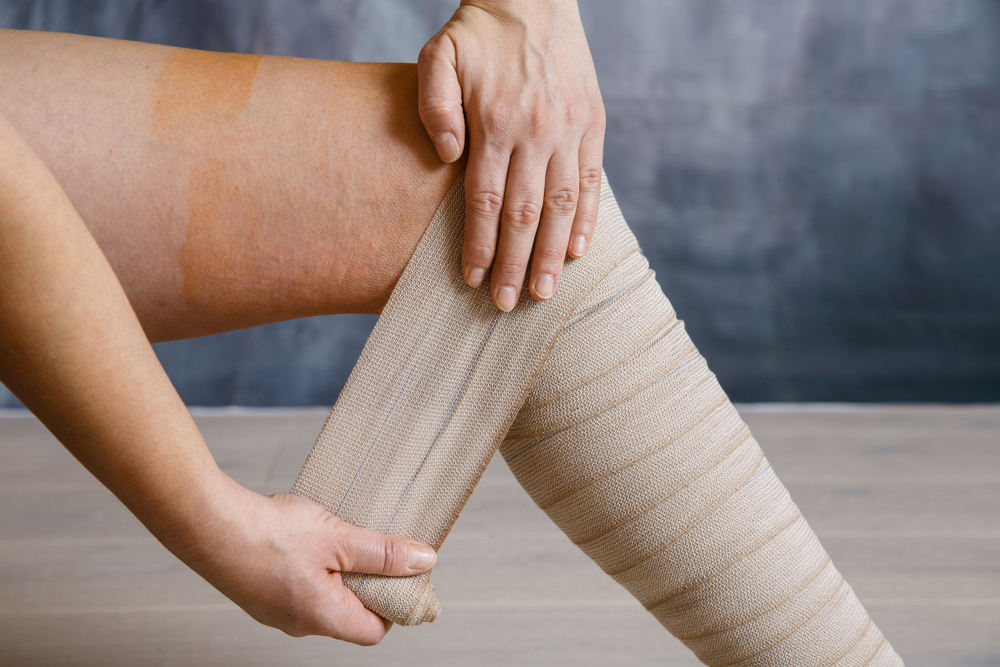
After endovenous laser treatment (EVLT), it is reasonable to wonder whether a bruise, tender spot, or pulling sensation belongs in the normal healing category. EVLT recovery is usually manageable, but knowing what to watch for makes those first weeks less uncertain.
The Vein Center of Maryland offers endovenous laser ablation among its vein treatment options. Before your procedure, ask oour clinical team for aftercare instructions and a contact plan.
The timeline below is a general guide. Your instructions take priority, particularly if you have additional vein procedures or medical conditions.
Week 1 of EVLT Recovery: Walking and Mild Soreness
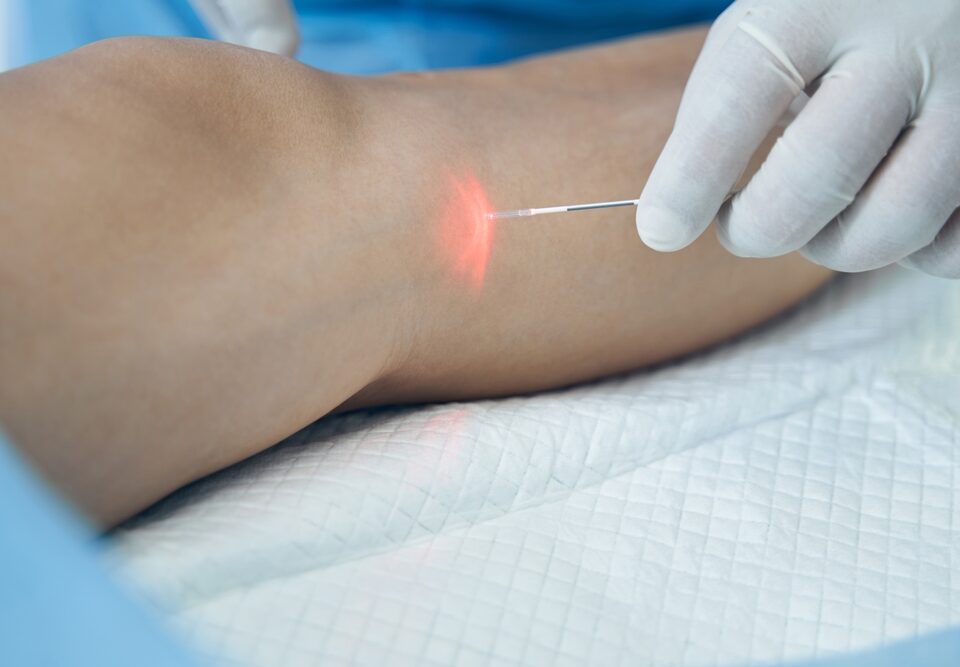
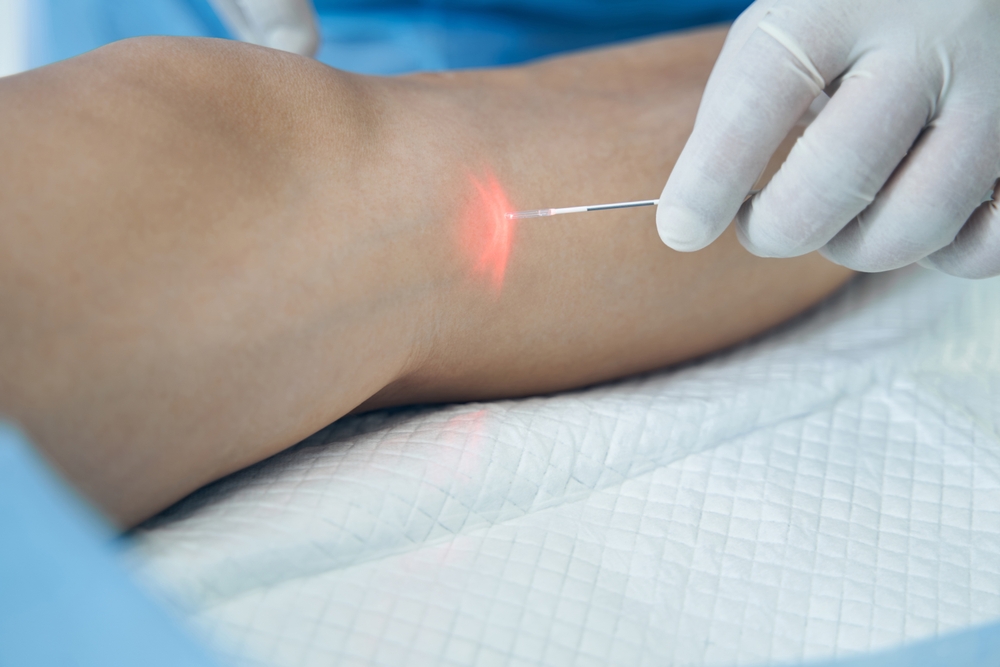
EVLT uses laser heat to close a problematic vein, allowing blood to travel through other veins. Treatment is usually outpatient, and walking is generally encouraged soon afterward.
Bruising and tenderness along the treated area are common. Mild swelling or a tight, pulling sensation may also occur. These symptoms can feel unfamiliar without necessarily indicating a complication.
Take gentle walks as directed. Avoid replacing your routine with prolonged bed rest, but also avoid treating early mobility as permission for strenuous workouts.
Wear prescribed compression according to your provider’s schedule. Follow instructions for dressings, showering, and pain relief rather than borrowing someone else’s recovery routine.
Ask when driving and work are appropriate. Your job demands, medication use, and ability to move comfortably all influence that decision.
Week 2: Discomfort May Linger
Bruising and soreness can persist into the second week. Some people notice pulling along the treated vein during this period, even after returning to ordinary activities.
The important distinction is manageable discomfort versus severe, new, or concerning symptoms. Significant worsening should prompt a call rather than an assumption that everything is normal.
Continue walking and follow any restrictions on heavy lifting, running, or prolonged standing. Your provider should explain when to increase activity and whether compression should continue.
Do not stop or extend treatment instructions based solely on the calendar. Two people having EVLT may receive different recommendations because their procedures and health histories differ.
Weeks 3 and 4: Review Progress Before Increasing Activity
By this stage, many patients are back to much of their usual routine. However, there is no deadline by which every bruise, symptom, or visible vein must disappear.
Keep your follow-up appointment. Your clinician may use ultrasound to assess the treated vein and determine whether further care is needed.
Ask about returning to demanding exercise, work shifts, and travel. Persistent symptoms deserve discussion even if they seem less dramatic than your discomfort before treatment.
At The Vein Center of Maryland, we use duplex ultrasound in evaluating venous disease and planning treatment. Discuss your follow-up schedule directly with the practice rather than assuming an online timeline matches its protocol.
Red Flags: When to Call or Seek Emergency Care
Contact your treating team promptly for increasing redness, warmth, drainage, fever, uncontrolled bleeding, or pain that interferes with normal activities.
New or worsening swelling, particularly sudden swelling in one leg with calf pain, needs urgent assessment because a blood clot is possible. Do not massage the area or exercise through it.
Call 911 for sudden shortness of breath, chest pain, coughing blood, or fainting. These can signal a medical emergency and should not wait for a routine office callback.
A recovery guide cannot determine whether your symptoms are harmless. When unsure, describe the change to your treating clinician.
Plan Your Recovery With Clear Instructions
Understanding EVLT recovery starts before treatment. Discuss compression, activity, follow-up visits, and whom to contact after hours.
Contact us online or give our office a call at 410-970-2314 to schedule a vein evaluation. Ask what recovery would involve for your veins, health history, and responsibilities.
Meet Your Vein Specialists: The Vein Center of Maryland
At The Vein Center of Maryland, healthy, pain-free legs begin with dedicated expertise. Our clinical team combines decades of specialized surgical leadership with advanced vascular imaging to deliver comfortable, minimally invasive vein care:
-
Yash Kumar, M.D., F.A.C.S. (Director & Board-Certified Surgeon): Diplomate of the American Board of Surgery and Fellow of the American College of Surgeons (FACS) with over 25 years of specialized experience treating varicose veins and venous disease. Dr. Kumar trained at the All India Institute of Medical Sciences and completed surgical residency at Sinai Hospital in Baltimore. He specializes in state-of-the-art, minimally invasive outpatient procedures—including Laser Venous Ablation, Radiofrequency Closure, Sclerotherapy, and Ambulatory Phlebectomy.
-
Krystal “Kit” Alcott, PA-C, RVT, RPhS (Physician Assistant & Vascular Specialist): Board-certified Physician Assistant holding dual specialized credentials as a Registered Vascular Technologist (RVT) and Registered Phlebology Sonographer (RPhS). A graduate of Nova Southeastern University, Kit has performed thousands of vascular ultrasounds and minimally invasive vein treatments. Beyond clinical care, she actively trains healthcare providers and sonographers nationwide in advanced vascular diagnostics and ultrasound guidance.